Inside a 150-Person Browser-Native AI Summit: A Virtual Conference Case Study
How an AI business summit for 150 ran entirely browser-native: no headsets, keynotes and networking delivered in 3 languages.
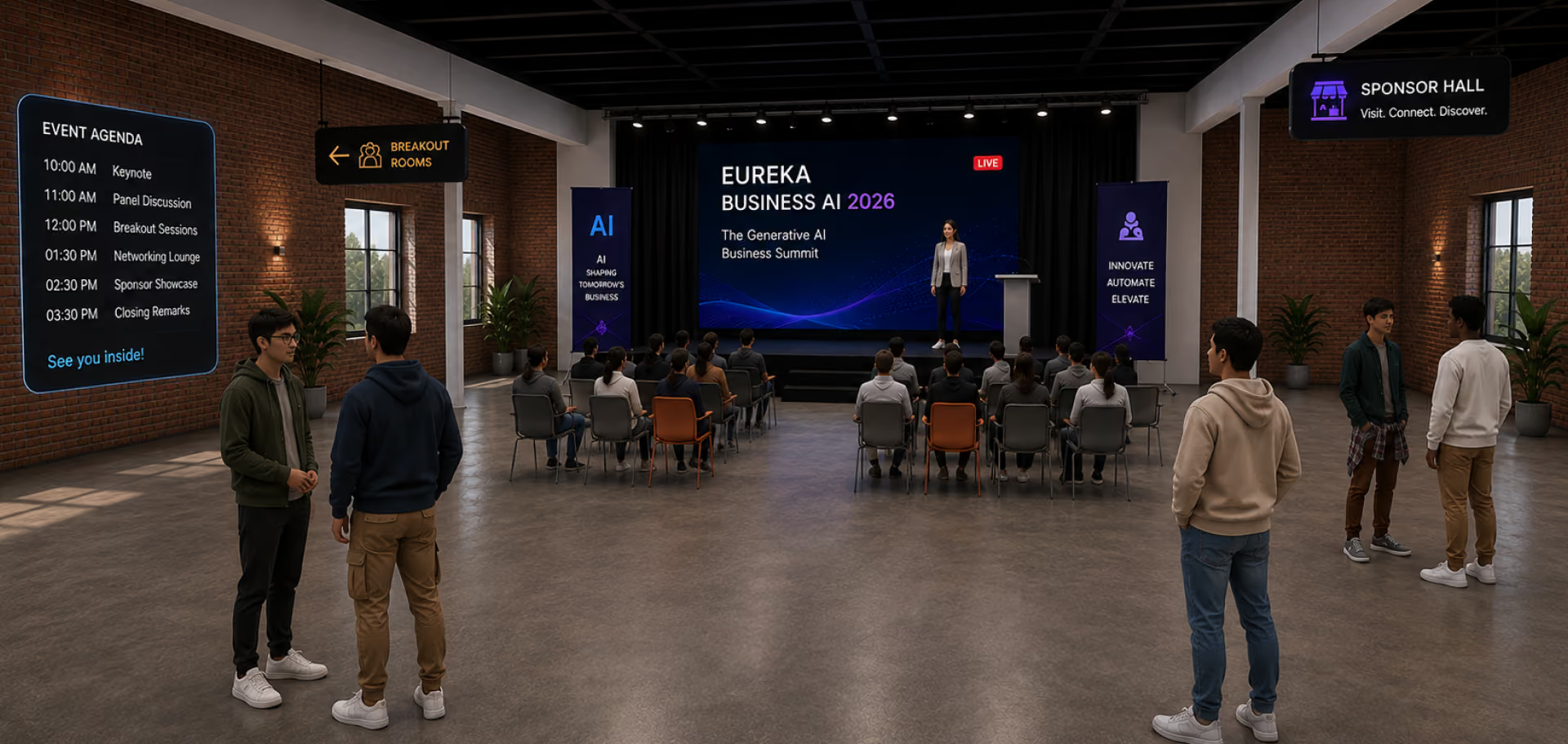
Eureka Business AI 2026, a two-day generative-AI business summit, ran for 150 attendees entirely browser-native — keynotes, networking, and multilingual delivery, without a single VR headset shipped to an attendee.
It's a useful reference point for anyone evaluating whether a spatial virtual conference platform can actually replace — or improve on — a traditional webinar-format event at real attendee volume.
What the event actually needed to do
A generative-AI business summit brought a specific set of demands: credible production quality for an audience that works in tech, genuine networking (not just Q&A), and delivery across language groups without running parallel event tracks.
How it was structured
- Keynote stage — main-session content delivered to the full attendee group as a shared spatial experience, not a video-tile broadcast
- Networking zones — spatial audio areas where attendee conversations formed by proximity, closer to a physical lobby than a chat window
- Multilingual delivery — content and navigation available across the languages the attendee base needed, from a single build rather than parallel events
The result that matters most
Every attendee joined from a browser link — no app download, no headset requirement, no device compatibility troubleshooting for a 150-person audience across likely dozens of device types. That's the practical proof point: spatial event production at real scale doesn't require solving a hardware logistics problem first.
Common questions
- What is a browser-native virtual event? A browser-native virtual event runs entirely inside a standard web browser — no app download or VR headset required to attend — while still delivering a spatial, 3D venue experience rather than a flat video call.
- How many attendees can a spatial virtual conference platform support? Eureka Business AI 2026 ran at 150 attendees browser-native; spatial event platforms are generally built to scale well beyond that figure, with capacity depending on the specific venue design and platform.
- What are metaverse events? Metaverse events are gatherings held inside persistent or session-based shared 3D environments, where attendees interact as avatars rather than as video tiles — the format the Eureka summit used for its keynote and networking sessions.
- Can a virtual conference platform support multiple languages in one event? Yes — the Eureka summit delivered content across multiple languages from a single event build, avoiding the need to run separate parallel events per language group.
- Do attendees need to download anything for a spatial virtual conference? No — attendees join via a browser link, QR code, or numeric code; no app installation or headset is required, which is part of why real attendee turnout is achievable at this format.
Related reading
See how this works on our virtual event platform page. You may also like Virtual Events in 2026: Formats That Still Get Attendance and Hybrid Event Platforms: How to Run One Without Losing Remote Attendees.
Get started
See what a summit like this looks like built for your audience. Get a Demo or Build for Free