Choosing a Virtual Training Platform: A Buyer's Guide for Enterprise L&D
Evaluating virtual training platforms? Focus on key features: hardware specs, no-code tools, analytics, and multilingual support.
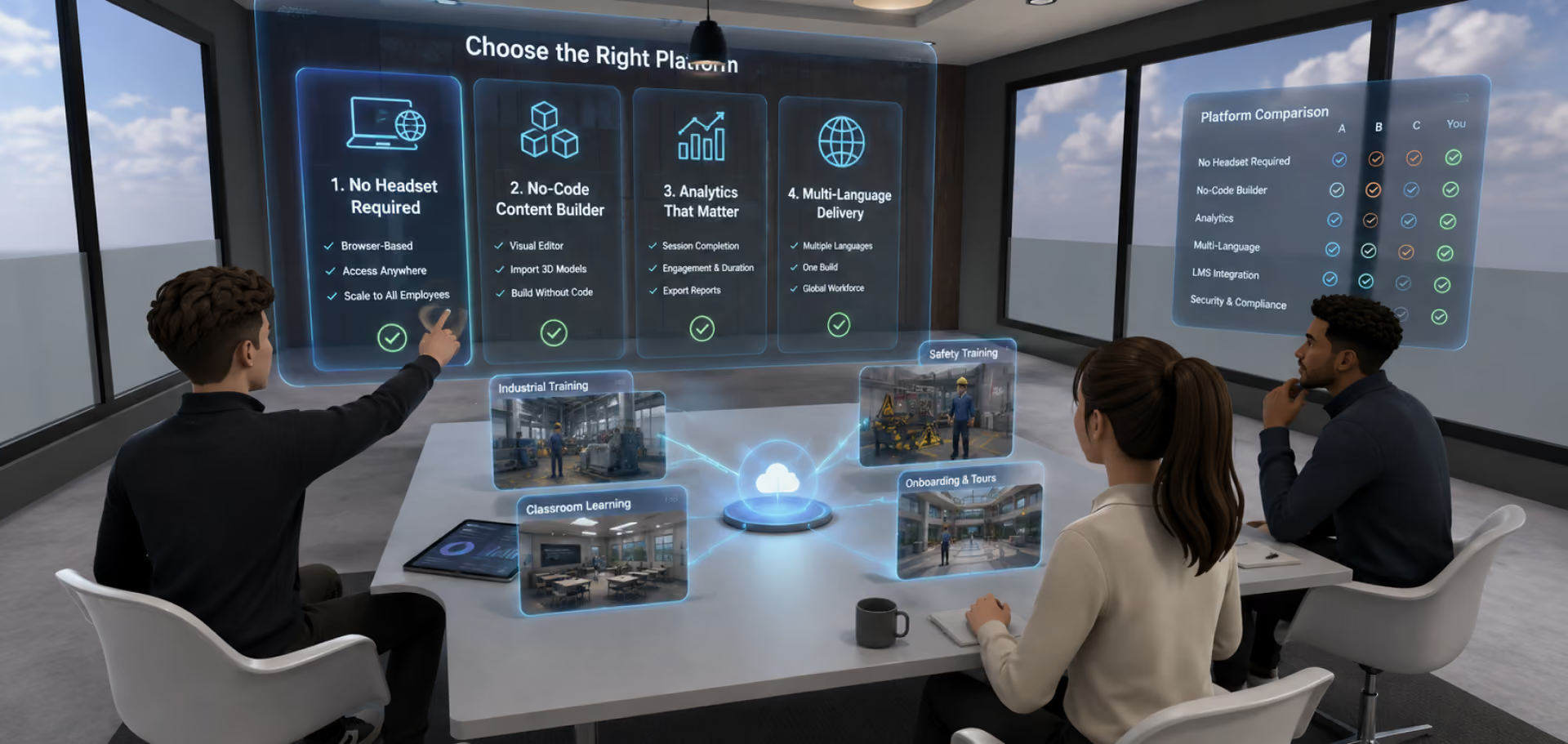
The right virtual training platform for enterprise L&D depends on four factors: whether it requires headsets, whether non-developers can build content, how it reports on completion and engagement, and whether it delivers in every language your workforce needs.
Most evaluation processes get bogged down comparing feature lists. These four questions cut through that faster than a full RFP.
1. Does it require VR headsets?
This is the single biggest factor in whether a program can actually scale past a pilot. A platform requiring headsets caps your reachable audience at however many devices you can procure and manage. A browser-native platform reaches every employee with a laptop or phone — headsets become optional, not gating.
2. Can your own team build content without developers?
If every new scenario or update requires a developer request, your training content will always lag your actual training needs. A no-code visual editor — where L&D builds by importing models and placing interactions — keeps content current without a development queue.
3. What does the analytics layer actually report?
Look for session completion, duration, and engagement tracked per environment out of the box. If analytics requires a separate integration or custom reporting build, that's ongoing overhead most L&D teams underestimate at purchase time.
4. Does it support multi-language delivery natively?
For distributed or multinational workforces, a platform that delivers training content in multiple languages from one build avoids maintaining parallel content pipelines per region.
Common questions
- What should enterprise L&D look for in a vr corporate training platform? Prioritize browser-native access (no headset requirement), a no-code content builder, native completion and engagement analytics, and multi-language delivery — these four factors determine whether a program scales past a pilot.
- How much does a virtual training platform typically cost? Costs vary by vendor and are usually structured as a platform subscription rather than per-scenario production fees — which means one subscription can support unlimited internally-built training scenarios, unlike agency-produced content billed per project.
- Can a virtual training platform integrate with our existing LMS? Many platforms support LMS embedding, letting a 3D training environment launch from within your existing learning management system rather than replacing it — check this specifically if LMS integration is a requirement.
- Is VR corporate training only useful for large enterprises? No — no-code platforms with subscription pricing have made VR corporate training accessible to mid-sized organizations too; the barrier historically was custom development cost, which no-code tools remove.
- What's the biggest mistake companies make when evaluating VR training platforms? Underweighting the no-code content-building requirement. Many platforms look strong in a sales demo built by the vendor's own team, but fall apart when the buyer's own L&D staff tries to build their second scenario without support.
Related reading
See how this works on our enterprise VR training platform page. You may also like What Is Immersive Training? Benefits, Use Cases & ROI and VR Safety Training: 12 Scenarios Worth Simulating.
Get started
See your own scenario built live during the demo, not a canned walkthrough. Get a Demo or Build for Free