Digital Twins vs. Virtual Prototypes: What R&D Teams Actually Need
Digital twins and virtual prototypes solve different R&D needs at different stages. Here’s how to choose the right tool for your team.
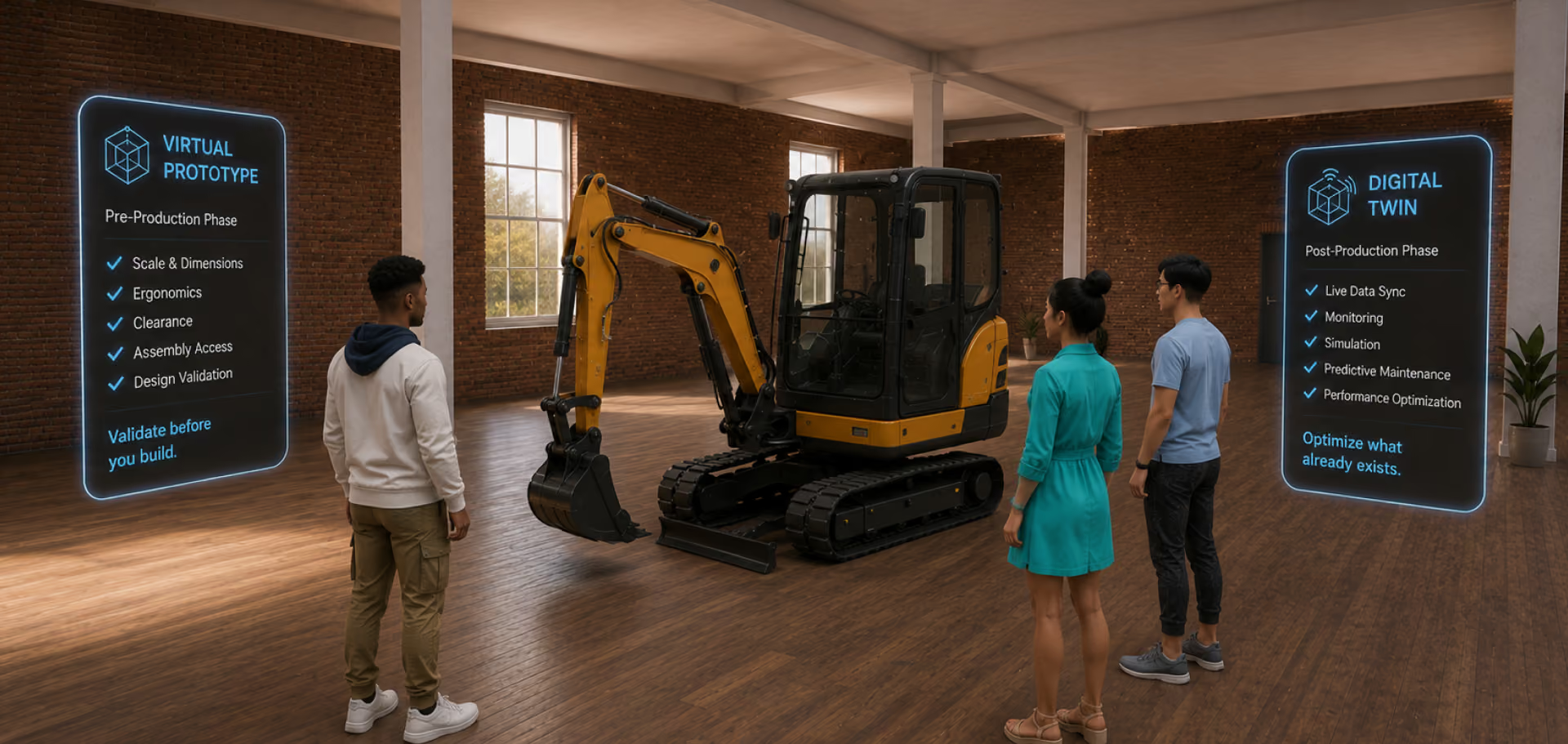
A digital twin is a continuously updated virtual model of a physical asset that already exists, synced with real-world data — used for monitoring and simulation. A virtual prototype is a 3D model of a product that doesn't exist yet, used for design review before physical production. Different stage, different job.
Teams researching "digital twin" for a pre-production design review are usually looking for the second thing without knowing the term for it — which is exactly the confusion worth clearing up.
The stage each one belongs to

Why R&D teams evaluating pre-production design reviews want virtual prototyping
If the question is "does this design work before we build it" — checking clearance, scale, and ergonomics on something that doesn't physically exist yet — that's virtual prototyping, not a digital twin. A digital twin requires a physical asset to sync against, which by definition doesn't exist during early design review.
When you actually need both
Mature product lifecycles often use both in sequence: virtual prototyping during design, transitioning to a digital twin once the physical product ships and needs ongoing monitoring. They're sequential tools on the same timeline, not competing categories.
Common questions
- What is the difference between a digital twin and a virtual prototype? A digital twin models an existing physical asset with live data syncing for monitoring and simulation. A virtual prototype models a product before it's built, used for early design review — the twin requires a real asset to exist first, the prototype doesn't.
- Which one do we need for pre-production design review? Virtual prototyping — reviewing scale, ergonomics, and clearance on a 3D model before physical production begins is a pre-production use case, which by definition can't rely on a digital twin since no physical asset exists yet to twin.
- Can a virtual prototype become a digital twin later? Not directly, but the same underlying 3D model often carries forward — the virtual prototype used in design review can become the visual basis for a digital twin once the physical product ships and starts generating real-world data to sync against.
- What file formats work for virtual prototyping? GLB, GLTF, and OBJ are the standard formats for importing CAD-derived or AI-generated 3D models into a virtual prototyping tool — the typical export path from most CAD and 3D-generation pipelines.
- Is virtual prototyping only useful for physical products? It's most common for physical products and industrial equipment, but the same true-scale review approach applies to architectural and facility design where evaluating spatial scale before construction matters just as much.
Related reading
See how this works on our virtual prototyping and design review page. You may also like Virtual Reality Engineering: How Teams Review Designs Without Physical Prototypes and What Is the Industrial Metaverse? A Practical Guide for Engineering Teams.
Get started
Bring your model, review it at scale before you build it. Get a Demo or Build for Free