What Does an XR Agency Do?
What does an XR agency actually do? Discover how custom VR and 3D projects are built—and when hiring one is the right call.
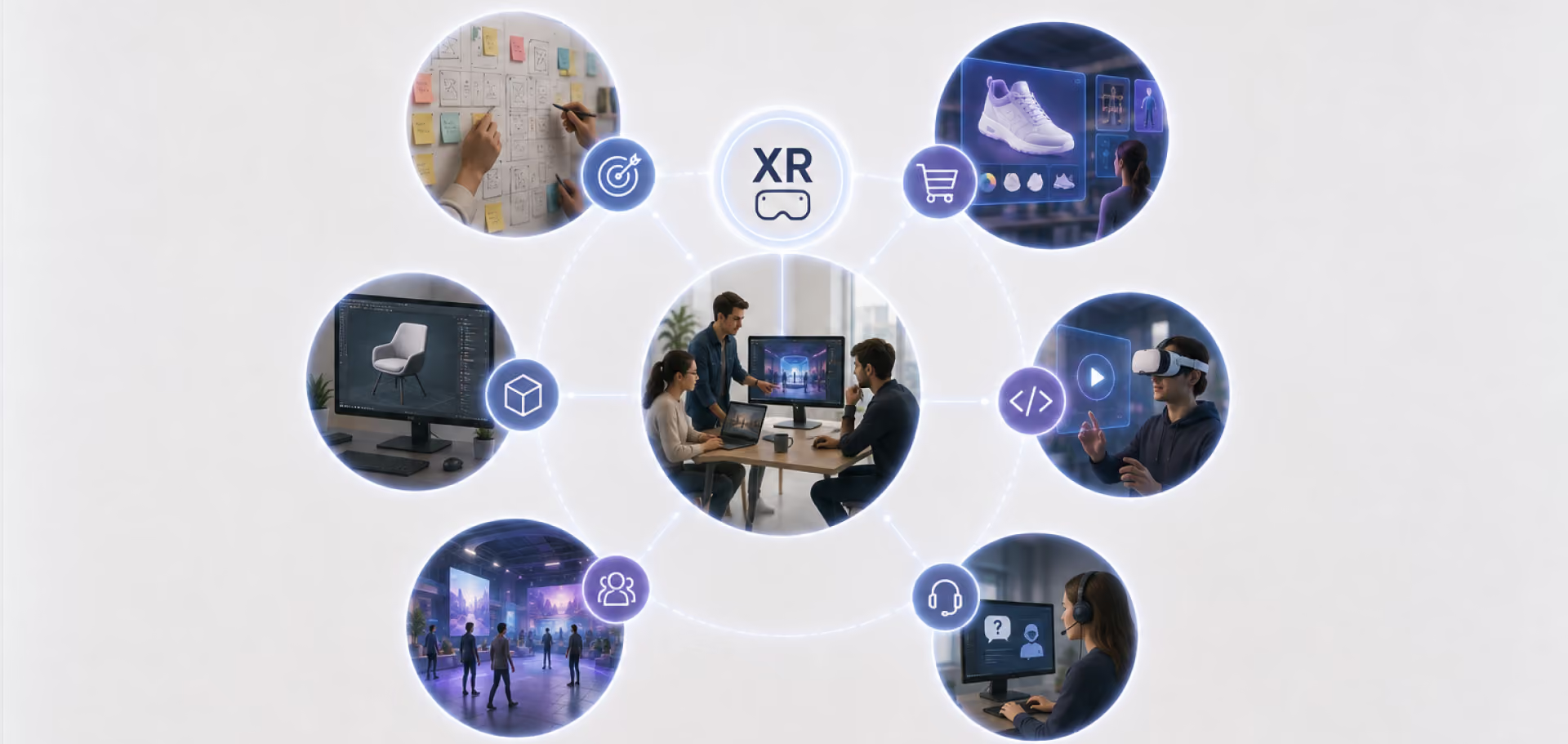
An XR agency designs, builds, and launches custom extended reality experiences — virtual reality, augmented reality, and browser-based 3D environments — on a client's behalf, end to end. Instead of a team learning a platform and building internally, the agency owns strategy, 3D production, development, and launch, and hands back a finished, branded experience.
That's the core distinction worth sitting with before you read another word: an XR agency is a done-for-you model. It exists for the organization that wants the outcome — a working virtual event, a training simulation, a brand activation — without building internal XR capability to get there.
What's actually included in an XR agency engagement
Most engagements move through a consistent arc, even when the deliverable varies wildly:
- Discovery & strategy — defining the use case, audience, and success metric before anyone opens a 3D tool
- Environment & asset design — building or sourcing the 3D models, environments, and interactions (GLB/GLTF/OBJ pipelines, AI-generated assets where useful)
- Development — wiring up interactivity, multi-user logic, analytics, and any integrations the experience needs
- Launch & hosting — publishing the experience to a live, shareable URL and managing the technical rollout
- Post-launch support — updates, seasonal refreshes, and performance reporting
What makes a good fit for agency delivery
XR agency work tends to make the most sense for one-off, high-stakes builds — a flagship product launch, an executive-facing prototype walkthrough, a branded activation tied to a single campaign moment — where the organization doesn't plan to build XR content regularly enough to justify standing up an internal team.
If XR is becoming a recurring part of how you train, sell, or communicate, that calculus changes — see the next question below.
Common questions about XR agencies
- What's the difference between an XR agency and an XR platform? An XR agency builds and delivers a finished experience for you; an XR platform gives your own team the tools to build experiences yourselves. Agencies suit one-off, high-production builds. Platforms suit teams that will publish XR content repeatedly and want to own that capability internally.
- How long does an XR agency project take? Timelines vary by scope, but a well-defined activation, training scenario, or event environment typically launches in weeks, not quarters — assuming assets (3D models, brand guidelines, content) are ready at kickoff. Complex multi-environment builds run longer.
- Do we need VR headsets for what an XR agency builds? No, not by default. Most enterprise XR agencies now build browser-native experiences that run on any laptop, tablet, or phone, with headset support as an optional immersion layer rather than a requirement — which is what makes rollout to a whole audience realistic.
- Can an XR agency also train our team to build going forward? Some can. It's worth asking directly during discovery — a hybrid engagement (agency builds the first flagship experience, then hands off a platform your team maintains) is common for organizations expecting to scale XR use beyond a single launch.
Related reading
See how this works on our Next Reality Digital XR Agency page. You may also like In-House XR Team vs. XR Agency: How Enterprises Should Decide and Brand Activation Agency vs. DIY Platform: Choosing the Right Model.
Get started
See what a done-for-you build looks like for your use case. Get a Demo or explore the self-serve path with Build for Free