VR in Education: Use Cases, ROI, and How to Get Started
Considering VR in education? Discover real use cases, ROI expectations, and a simple 3-step path to launching your pilot program.
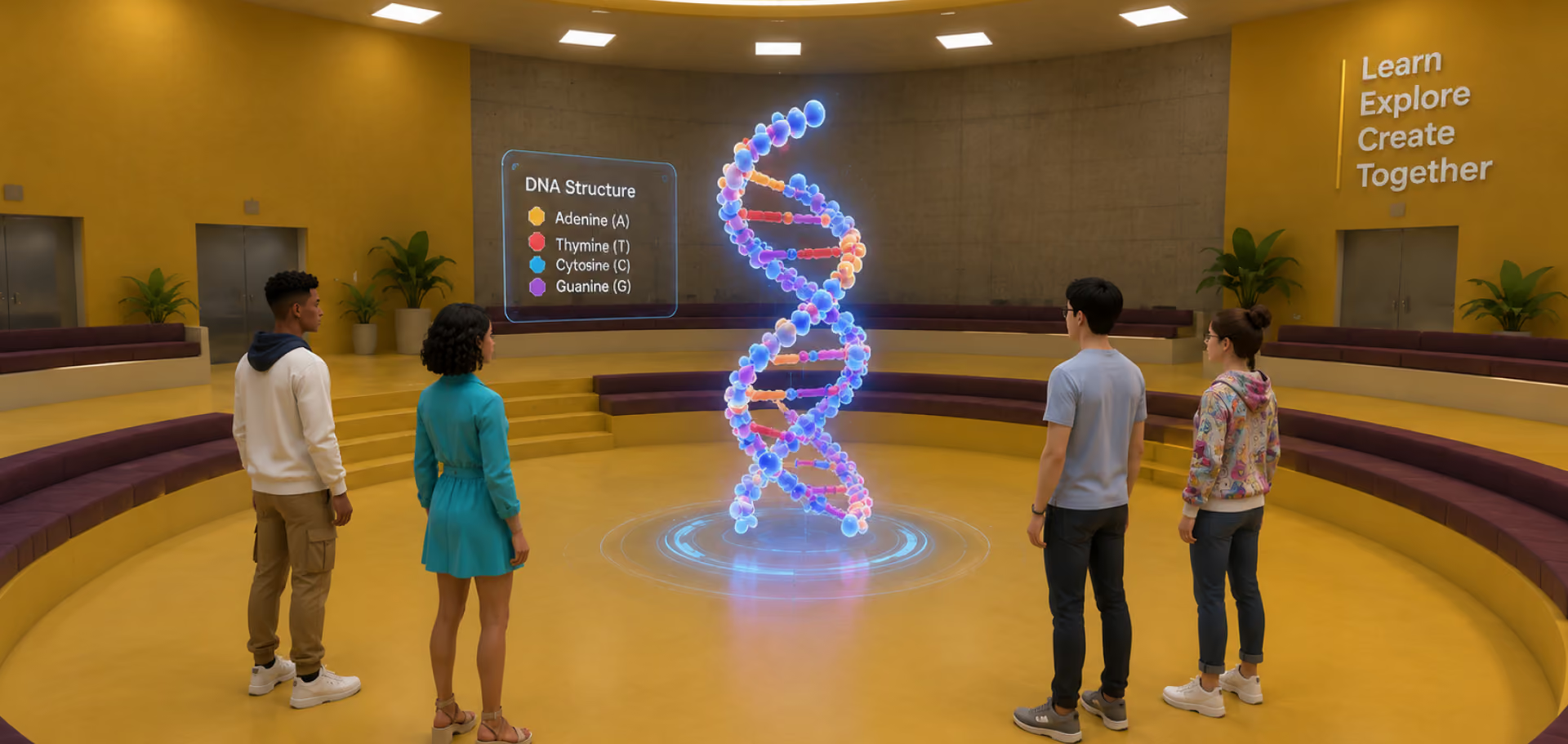
VR in education spans virtual classrooms, science labs, campus tours, historical immersion, and STEM visualization — and its ROI shows up as improved engagement, better retention on spatial subjects, and, for recruitment use cases, direct impact on applications and enrollment.
Institutions evaluating VR usually start with a single question that's hard to answer generically: is it worth it for us? The honest answer depends on which use case you're targeting
The five most common use cases
- VR classrooms for distributed or hybrid cohorts
- Virtual science labs — repeatable, consumable-free experiments
- Virtual campus tours for international student recruitment
- Historical and cultural immersion for humanities courses
- STEM visualization — molecules, anatomy, and engineering models at scale
What ROI actually looks like by use case
Recruitment-oriented use cases (virtual campus tours) have the most direct ROI story — international applicants who tour a campus virtually convert at meaningfully different rates than those relying on photos alone, and the tour asset serves every future admissions cycle. Instructional use cases (labs, STEM visualization) show ROI as retention and engagement gains rather than a hard revenue number — track them against existing course outcome metrics rather than inventing a new KPI.
A simple path to a first pilot
- Pick one use case, not five — a single lab, or a single campus tour, not a full curriculum overhaul
- Build in a no-code editor — import existing 3D assets, or start from an AI-generated model, and assemble visually
- Measure engagement from day one — attendance, session duration, and completion give you the data for the second pilot's approval
Common questions
- What is VR in education used for? The most common enterprise and institutional uses are virtual classrooms, science lab simulations, campus tours for recruitment, historical and cultural immersion, and STEM visualization — spanning both instruction and student recruitment.
- What's the ROI of VR in education? ROI varies by use case: recruitment tools like virtual campus tours have a direct conversion story, while instructional uses like labs and STEM visualization typically show ROI as improved engagement and retention against existing course metrics.
- Do we need a large budget to pilot VR in education? No. Browser-native, no-code platforms remove the two largest cost drivers — headset hardware and custom development — letting institutions pilot a single use case with existing staff and a modest content-building effort.
- How long does a VR education pilot take to launch? A focused single-use-case pilot — one lab or one campus tour — typically launches in a matter of weeks on a no-code platform, assuming source 3D models or content are available at the start.
- Can VR in education support multiple languages for international students? Yes, on platforms built for multilingual delivery — content and guided tours can be built and delivered in multiple languages, which matters directly for international recruitment use cases.
Related reading
See how this works on our virtual reality education platform page. You may also like Immersive Learning: The Complete Guide for Educators and Virtual Classroom vs. Virtual Reality Classroom: What's the Difference?.
Get started
See a pilot built around your use case in twenty minutes. Get a Demo or Build for Free