VR Safety Training: 12 Scenarios Worth Simulating
VR safety training lets teams practice hazardous procedures with zero risk. Discover 12 real scenarios being simulated today.
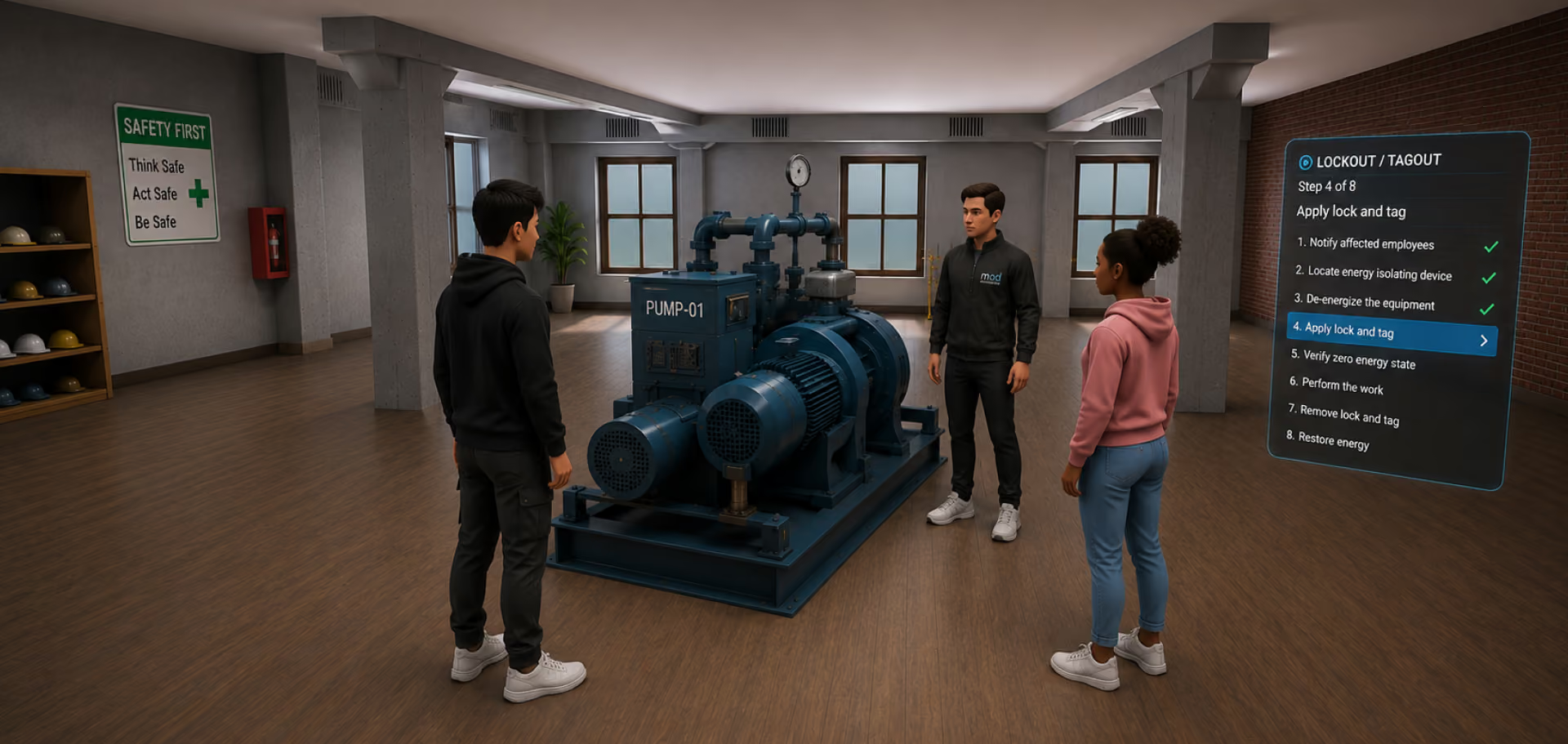
VR safety training lets employees practice hazardous procedures — evacuations, lockout/tagout, confined-space entry — inside a realistic simulation where mistakes carry zero real-world cost. Teams repeat scenarios until the correct response becomes automatic, something no slide deck or annual compliance video can replicate.
Below are twelve scenarios organizations are actively simulating, grouped by how they show up in most safety programs.
Emergency response scenarios
- Fire evacuation — practicing egress routes and muster points under simulated urgency
- Active shooter / lockdown procedure — decision-making under stress, without real risk
- Medical emergency response — first-response steps before professional help arrives
- Chemical spill containment — correct containment sequence practiced repeatedly
Industrial & facility scenarios
- Lockout/tagout (LOTO) — the step-by-step sequence for de-energizing equipment safely
- Confined-space entry — permit checks and hazard recognition before entry
- Machine guarding awareness — recognizing unsafe equipment states before they cause injury
- Fall protection and working at height — harness checks and anchor point selection
Workplace hazard scenarios
- Hazard recognition walkthroughs — spotting unsafe conditions across a simulated facility
- Forklift and vehicle safety zones — pedestrian awareness in shared traffic areas
- PPE selection and use — matching protective equipment to the correct task
- New-site orientation hazard tours — a repeatable walkthrough for every new hire, every site
Why these scenarios work better in VR than in a classroom
Classroom-based safety training tests recall of a procedure. VR safety training tests execution of it — the trainee performs the steps rather than describing them, which is the gap most incident investigations point back to.
Common questions
- What is VR safety training? VR safety training is a simulation-based training method where employees practice hazardous procedures — like lockout/tagout or evacuation — inside a realistic 3D environment, allowing repeated practice without real-world risk or production downtime.
- Is VR safety training more effective than traditional methods? Evidence generally favors it for procedural and hazard-recognition training specifically, because trainees perform the response rather than recall it — the same distinction between reading about a skill and rehearsing it.
- Do employees need VR headsets for safety training scenarios? No, on browser-native platforms — scenarios run on desktop, mobile, or tablet, with headsets available as an optional deeper-immersion option, which matters for rolling training out across an entire workforce rather than a small pilot group.
- Can VR safety training scenarios be customized to our specific facility? Yes — importing your own facility layout or equipment models (GLB/GLTF/OBJ) lets scenarios reflect your actual site rather than a generic template, which improves transfer to real-world performance.
- How do we track completion for compliance reporting? Platform-native analytics track session completion, duration, and engagement per scenario, giving safety and compliance teams the documentation typically required for training records.
Related reading
See how this works on our enterprise VR training platform page. You may also like What Is Immersive Training? Benefits, Use Cases & ROI and Choosing a Virtual Training Platform: A Buyer's Guide for Enterprise L&D.
Get started
Build your first safety scenario around your actual facility. Get a Demo or Build for Free