What Is Immersive Training? Benefits, Use Cases & ROI
Immersive training puts employees inside realistic 3D scenarios. Discover where it works best and how to measure real ROI.
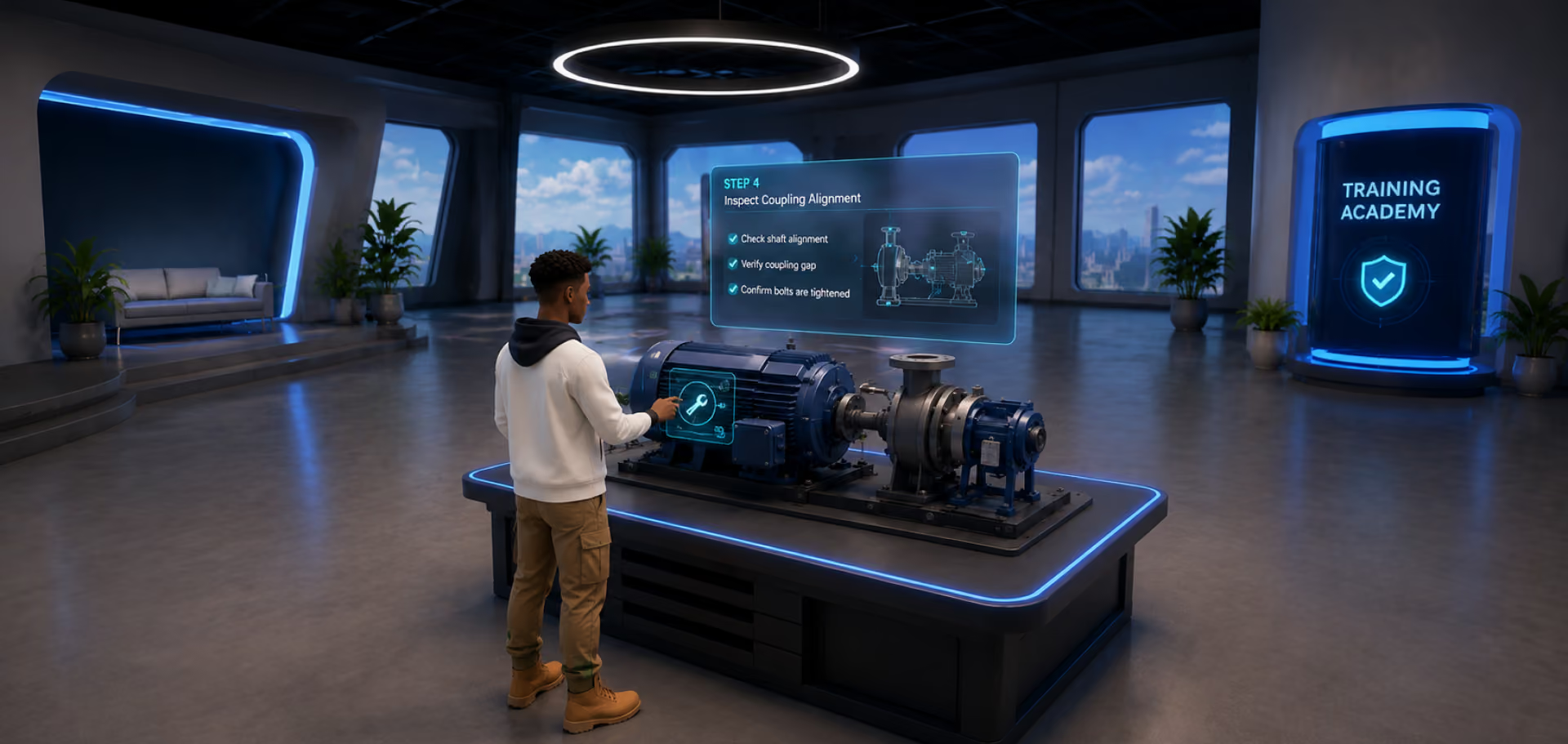
Immersive training is workplace instruction delivered inside interactive 3D simulations, where employees perform tasks — operating equipment, handling a difficult conversation, responding to a hazard — instead of watching a video or reading a manual about them.
The core claim behind immersive training isn't new — "practice beats theory" is old wisdom. What's new is that browser-based VR training now makes practice-based instruction deployable to a whole workforce, not just a small pilot cohort with headsets.
Where immersive training consistently outperforms
- Procedural and equipment training — operating machinery on a true-scale 3D model with zero downtime risk
- Soft skills and role-play — practicing a difficult conversation with an AI-driven counterpart that responds in real time
- Safety and compliance — see our dedicated guide on VR safety training scenarios
- Onboarding — walking new hires through a facility or process before day one
Measuring immersive training ROI
The clearest ROI signal is time-to-competency — how long it takes a trainee to perform a task correctly and consistently. Immersive, practice-based training generally shortens this window versus passive formats, because trainees rehearse the decision rather than just hear about it. Track completion, session engagement, and time-to-competency together; any one metric alone tells an incomplete story.
Common questions
- What is immersive training? Immersive training is skills instruction delivered inside interactive 3D simulations where employees actively perform tasks — like operating equipment or practicing a conversation — rather than passively watching or reading about them.
- Is immersive VR training actually more effective than traditional training? Research generally supports better retention and faster time-to-competency for skills practiced through immersive, active methods versus passive video or classroom formats — the effect is strongest for procedural and hands-on skills.
- What industries use immersive training the most? Manufacturing, logistics, healthcare, retail, and any industry with physical procedures, safety-critical tasks, or high-volume onboarding tend to adopt immersive training first, because the ROI case is most direct there.
- Do employees need special hardware for immersive training? No, on browser-native platforms — training runs on any laptop, tablet, or phone, with VR headsets optional for teams seeking deeper immersion, which is what makes workforce-wide rollout realistic.
- How is immersive training built without a developer team? No-code visual editors let L&D teams import 3D models of facilities or equipment and assemble training scenarios by placing interactions visually, without writing code.
Related reading
See how this works on our enterprise VR training platform page. You may also like Choosing a Virtual Training Platform: A Buyer's Guide for Enterprise L&D and VR Safety Training: 12 Scenarios Worth Simulating.
Get started
See a training scenario built around your workforce. Get a Demo or Build for Free